Why Standard Sleep Advice Fails for Sensory-Sensitive and ADHD Brains
If you have ADHD, anxiety, or a sensory processing difference, you have probably tried the usual tips: blackout curtains, cool room temperature, no screens before bed. You did all of that, and you still lie awake at 2 a.m., your brain replaying every conversation from the past week. You are not lazy or broken. The generic advice misses the real problem: your brain is wired to notice everything, and the bedroom is full of invisible triggers.
The standard sleep hygiene list assumes your brain will calm down once the environment is dark and quiet. But for many of us, darkness and quiet are not enough. We need to actively reduce sensory load, automate decisions, and create a space that works with our executive dysfunction – not against it. This guide is about making your bedroom sleep friendly in a way that actually respects how your brain works.
I have spent years experimenting with my own sleep space, and I have helped friends with ADHD and sensory sensitivities do the same. What I have learned is that the best bedroom setup is not about perfection. It is about removing friction and giving your nervous system what it craves, whether that is deep pressure, brown noise, or a dim light that turns itself off without you having to remember.
Below, I share the exact strategies that work, including some that most articles never mention. And if you are looking for a broader framework, check out our guide on how to set up a calming bedroom – it covers the foundational elements in more detail.
Visual Noise Reduction: Taming the Clutter Your Brain Can’t Ignore
Most people with ADHD know the feeling: you walk into your bedroom, see the pile of laundry on the chair, the stack of books on the nightstand, the half-unpacked box in the corner, and your brain instantly goes into overdrive. That is visual noise. It is not just about mess – it is about the constant stream of unfinished tasks and irrelevant stimuli that your brain processes whether you want it to or not.
The solution is not to become a minimalist or to throw everything away. It is to reduce the number of visual cues that demand your attention. The key is covered storage. Open shelves and clear bins are counterproductive because they show everything. Instead, use opaque bins, baskets with lids, or drawers that you can close.
For example, I keep a small, lidded basket on my nightstand for my phone, glasses, and a book. Before bed, everything goes in the basket, and the lid goes on. That simple action – closing the lid – sends a signal to my brain that the workday is over. It also prevents the “just one more scroll” trap because the phone is out of sight.
Create a dedicated “landing zone” near the door for keys, wallet, and other daily items. It does not have to be fancy – a small tray on a dresser works. The point is that everything has a place, and your brain does not have to wonder where things are. When you reduce visual clutter, you reduce the cognitive load that keeps your mind racing at night.
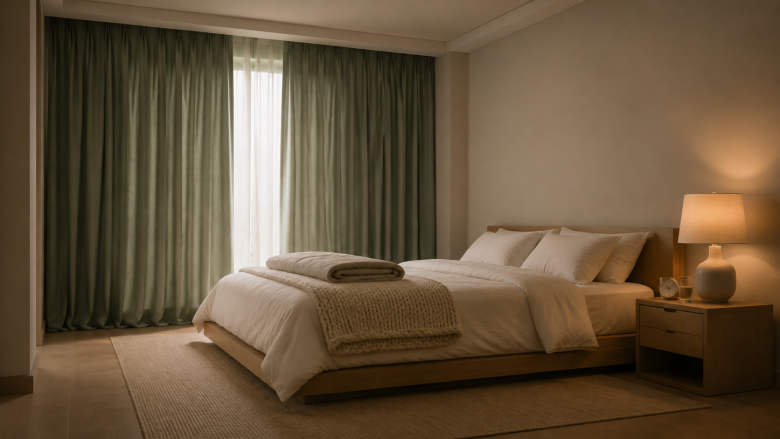
One thing nobody tells you about visual noise is that it is not just about objects. It is also about patterns and colors. Busy wallpaper, loud duvet covers, and even a patterned rug can be overstimulating. If you cannot repaint, try a solid-colored throw blanket or a plain bedspread to break up the visual chaos. You might be surprised how much calmer your brain feels.
If you struggle with executive dysfunction, do not try to declutter your entire room in one session. That will just overwhelm you. Pick one small area – one drawer, one shelf, one corner – and spend 15 minutes. Set a timer if you need to. The goal is progress, not perfection. And remember, the best storage solution is the one you actually use. If you are not going to put things away, then having fewer things is the better option.
Body Doubling and Self-Soothing: Fidgets and Weighted Items Near the Bed
ADHD brains often need stimulation to relax. That sounds contradictory, but it is true. For many of us, complete stillness and silence are actually uncomfortable. Our nervous systems crave input, and if we do not provide it deliberately, we will seek it out in unhelpful ways, like picking up our phone or getting up to raid the fridge.
The solution is to have calming sensory tools within arm’s reach of the bed. This is where the concept of “body doubling” comes in – not in the traditional sense of having another person present, but in the sense of having a physical object that provides grounding. A weighted blanket is the classic example. The deep pressure stimulation (DPS) from a weighted blanket has been shown to reduce anxiety and improve sleep quality for some people. But you do not have to commit to a heavy blanket. A weighted lap pad, a weighted eye mask, or even a heavy stuffed animal can work.
I have a basket next to my bed that I call my “calm-down kit.” It contains a few fidget toys (a silicone pop-it, a smooth stone, a spiky ball), a small weighted lap pad, and a pair of earplugs. When I feel restless or my mind starts spinning, I reach for the basket instead of my phone. The fidget gives my hands something to do, and the weight provides a sense of security.
You might be skeptical about fidgets, especially if you are not someone who fidgets during the day. But in the middle of the night, when your brain is in hyperarousal, a repetitive motion can be incredibly soothing. The key is to choose items that are quiet and do not require much thought. You do not want a fidget that makes noise or requires you to solve a puzzle.
Another option is a body pillow or a long, firm pillow that you can hug. This mimics the feeling of being held, which can reduce cortisol levels. Many people with ADHD and anxiety find this deeply calming. If you share a bed, you can still use a body pillow on your side – just be prepared for your partner to complain about it taking up space.
The most important thing is to experiment. What works for one person might not work for you. Try a few different items and see what your body responds to. I remember the first time I tried a weighted eye mask – I was shocked at how quickly I fell asleep. But my friend with ADHD hates it because she feels claustrophobic. Listen to your own nervous system.
Smart Lighting That Removes Friction: Automate Your Dimming Schedule
One of the biggest obstacles to falling asleep is the transition from bright, stimulating light to darkness. Our brains need the cue that it is time to wind down. But if you have ADHD, you might forget to dim the lights, or you might be too engrossed in a task to notice the time. This is where smart lighting can be a game-changer.
The idea is simple: set your lights to automatically dim and change color temperature at a specific time in the evening. You do not have to remember to do anything. The lights do it for you. This removes the executive function burden of initiating the wind-down routine.
I use a smart bulb in my bedside lamp that is programmed to shift from bright white to a warm amber at 9 p.m., and then to turn off completely at 10:30 p.m. I also have a separate smart plug that controls my salt lamp (which gives off a nice, warm glow) and is set to turn on at 9 p.m. and off at midnight. I never have to think about it.
You do not need a whole smart home system. A single smart bulb and a smartphone app are enough. The key is to choose a bulb that supports scheduling and has a wide range of color temperatures. Some apps also have a “sunset” mode that gradually dims over 30 minutes, which mimics a natural sunset and gives your brain time to adjust.
If you are not ready to invest in smart bulbs, you can use a simple timer plug for a lamp. Plug your lamp into the timer, set it to turn off at a certain time, and you are done. It is not as graceful, but it works.
One mistake I made early on was setting the lights to turn off completely at bedtime. That was too abrupt. My brain was still active, and suddenly being plunged into darkness felt jarring. Now I have a two-stage system: first, the lights dim and turn warm; then, 30 minutes later, they turn off. That gradual transition makes a huge difference.
Another tip: use red or amber light for the hour before bed. Blue light suppresses melatonin, but red light does not. Many smart bulbs have a “nightlight” mode that is red or very warm. I have my bedside lamp set to a deep red at 9 p.m. It feels cozy, and it does not interfere with sleep hormones.
For a deeper dive into evening routines that support this, see our article on how to make evenings more relaxing – it pairs well with automated lighting.
Sound Options Beyond White Noise: Brown Noise and Other Stimulating Sounds
White noise is the standard recommendation for blocking out disruptive sounds. But for some people with ADHD, white noise is too harsh or high-pitched. It can actually be distracting. That is where brown noise comes in. Brown noise is deeper and more rumbling than white noise – think of the sound of a distant waterfall or a low engine. Many people with ADHD find brown noise more calming than white noise because it provides a steady, low-frequency hum that does not demand attention.
There are also other options: pink noise (which is between white and brown, with a softer high end), nature sounds (rain, ocean waves, forest ambience), and even just a fan. The key is to find a sound that your brain can “tune into” without getting hooked on it. Some people prefer silence, but if you are someone who needs stimulation, a consistent, non-rhythmic sound can be perfect.
I use a Bluetooth speaker on my nightstand and a sleep sounds app that plays brown noise. I have it set to loop all night. The volume is just loud enough to mask the sound of my partner’s breathing and the occasional car outside. It does not put me to sleep instantly, but it prevents my brain from latching onto random noises and starting a thought spiral.
If you do not want to use an app, a simple fan can work wonders. The mechanical hum of a fan is a form of brown noise, and the airflow also provides sensory input. Many people with ADHD and sensory sensitivities report that a fan is non-negotiable for sleep.
One important note: if you use earbuds for sleep sounds, be careful about comfort and safety. In-ear earbuds can cause ear pain if you sleep on your side. Look for flat, low-profile earbuds designed for sleep, or use a small speaker placed at a low volume.
Also, consider the concept of “sound masking” vs. “sound stimulation.” Sound masking is about covering up disruptive noises. Sound stimulation is about providing a pleasant, grounding input. Brown noise and fans can do both. But if you find that any noise keeps you awake, then silence might be better for you. The only way to know is to test it.
Temperature Control for Sensory Spikes: Heating and Cooling Pads
Temperature is a huge factor in sleep quality, but it is not just about the thermostat. For people with ADHD and sensory sensitivities, temperature can fluctuate wildly during the night due to hyperarousal and dysregulation. You might go to bed feeling cold, then wake up drenched in sweat an hour later. Or you might have restless legs that overheat easily.
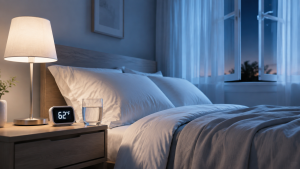
The standard advice is to keep your bedroom between 60-67 degrees Fahrenheit. That is fine, but it does not address individual spikes. This is where targeted temperature control tools come in: heated or cooling pads for the bed.
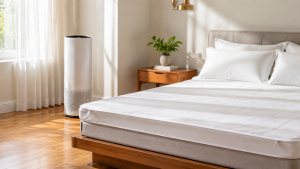
A cooling pad (often called a “chilipad” or a “cooling mattress topper”) circulates water through a pad on your mattress, allowing you to set a specific temperature. These are expensive (hundreds of dollars), but they are a game-changer for people who overheat at night. If you cannot afford that, a simple cooling pad (the kind you put in the freezer or just a gel-infused pad) can help.
On the other hand, some people with ADHD crave warmth and pressure. A heating pad on the lower back or feet can be deeply relaxing. I use a small electric heating pad on my feet in the winter. It warms up my toes, which helps me fall asleep faster because my body is not working to maintain its core temperature.
The key is to have options. Have a light blanket, a heavier comforter, and a cooling sheet set so you can adjust easily. Also, consider a dual-zone electric blanket if you share a bed. That way, you can have your side warmer or cooler than your partner’s without fighting.
One thing nobody tells you about temperature: your feet and hands are your body’s radiators. If your hands and feet are warm, your blood vessels dilate, which helps lower your core temperature and signals that it is time to sleep. So if you have cold feet, wear socks to bed. If you have hot feet, stick them out from under the covers.
Also, be mindful of the material of your pajamas and sheets. Synthetic fibers trap heat and moisture. Natural fibers like cotton and bamboo are more breathable. If you tend to overheat, choose a moisture-wicking fabric. If you tend to get cold, flannel or fleece might feel good, but they can also make you sweat if you are prone to that.
A Step-by-Step Low-Executive-Load Makeover (The 5-Item Framework)
If you are feeling overwhelmed by all these suggestions, do not worry. You do not have to do everything at once. In fact, trying to overhaul your entire bedroom in one weekend is a recipe for failure, especially if you have ADHD. Instead, use this simple five-item framework. Pick one item from each category, implement it this week, and then move on to the next. The goal is to make progress without burning out.
1. Visual Noise Reducer
Choose one thing that is cluttering your visual field and either cover it, remove it, or give it a designated home. This could be a laundry hamper with a lid, a closed storage bench, or a simple tray for your nightstand. The key is that it must be easy to use. If you have to fold clothes to put them in the bin, it is not low-executive-load. Get a bin that you can just throw things into.
2. Sensory Grounding Tool
Pick one item that provides calming deep pressure or tactile stimulation. This could be a weighted blanket, a fidget toy, a heating pad, or a body pillow. Place it within arm’s reach of your bed. Do not worry about which one is “best” – just pick one that appeals to you and try it for a week.
3. Automated Lighting
Set up at least one light source that changes automatically in the evening. This could be a smart bulb with a schedule, a timer plug for a lamp, or even a smart light strip. The goal is that you do not have to remember to dim the lights. If you cannot afford a smart bulb, just set a timer on your phone to remind you to dim the lights manually. But automation is better because it removes the effort.
4. Sound or Noise Source
Choose a sound that you can play consistently. This could be a fan, a white noise machine, a smartphone app with brown noise, or even a radio tuned to static. The important thing is that you can start it without fumbling. If you use a phone app, keep the phone on the nightstand and set a shortcut or alarm to start the sound. Or use a physical device that just has a switch.
5. Temperature Adjuster
Identify your biggest temperature complaint. Is it that you get too hot? Then get a cooling pad or a set of moisture-wicking sheets. Is it that you get cold? Then get a heating pad or an extra layer. The goal is to have a quick, easy way to adjust your body temperature without getting up and changing the thermostat.
That is it. Five items. You can do them in any order, but I recommend starting with the one that you think will have the biggest impact. For me, it was automated lighting, because it forced me to start my wind-down routine without thinking. For you, it might be the weighted blanket or the brown noise.
Once you have all five in place, you will have a bedroom that works with your brain, not against it. But remember, it is not about perfection. If something does not work, change it. The best setup is the one that helps you sleep.
What Can I Put in My Bedroom to Help Me Sleep? (Direct Answers)
This question comes up often, and the answer goes beyond the usual list of blackout curtains and a good mattress. Based on the sensory-aware approach, here are specific items you can add to your bedroom to improve sleep, especially if you have ADHD or sensory sensitivities.
- Weighted blanket or weighted lap pad – provides deep pressure stimulation that calms the nervous system.
- Fidget toys or small sensory objects – keep your hands busy so your brain can wander less.
- Brown noise machine or a fan – gives your brain a steady, non-distracting sound to focus on.
- Smart bulb with a warm dimming schedule – automates the transition to darkness.
- Opaque storage bins – hide visual clutter without requiring you to organize everything perfectly.
- Cooling pad or heating pad – allows you to adjust temperature on the fly.
- Body pillow – provides a sense of being held and helps with side sleeping.
- Earplugs or sleep headphones – for blocking out sudden noises without sacrificing comfort.
- Blackout curtains – yes, they are basic, but they are essential if you are sensitive to light. Opt for a color that does not add visual noise.
- Aromatherapy (essential oil diffuser) – lavender and chamomile are calming, but be careful if you are sensitive to smells. Start with a very low concentration.
The key is to choose items that address your specific sensory needs. Do not buy everything on this list. Start with one or two and see how they affect your sleep. You might be surprised by what works.
Common Mistakes and Trade-Offs I’ve Learned the Hard Way
When I first started optimizing my bedroom for sleep, I made plenty of mistakes. I hope you can learn from them.
Mistake 1: Going overboard with blackout curtains. I bought the thickest, most expensive blackout curtains I could find, and they were so heavy that they blocked all airflow and made the room stuffy. I also felt like I was in a cave. The solution was to use a lighter blackout liner that still blocked light but allowed some air circulation, and to leave a small gap at the top for ventilation.
Mistake 2: Relying on a white noise app on my phone. The app worked, but my phone was also a source of distraction. I would set the timer, then see a notification, and before I knew it, I was scrolling. I finally bought a dedicated white noise machine that has no screen and no notifications. That was a game-changer.
Mistake 3: Ignoring the smell of my bedding. I used a strong lavender linen spray every night, thinking it would help me sleep. But I am actually sensitive to strong scents, and it gave me a headache. I learned that less is more. A very subtle scent, or no scent at all, is better for me.
Mistake 4: Trying to declutter my entire room in one day. I spent a Saturday organizing everything, and by the end, I was exhausted and my room was messier than when I started because I had pulled everything out. The next day, I had no energy to finish. Now I set a 15-minute timer and just tackle one small area. It is much more sustainable.
The biggest trade-off is between comfort and practicality. A weighted blanket might feel amazing, but it can be too hot in the summer. A cooling pad might be perfect for night sweats, but it is expensive. You have to find the balance that works for your body and your budget.
Also, be honest about what you will actually use. If you know you will not charge a smart bulb or set up a schedule, then just buy a regular dimmer switch. The goal is to reduce friction, not add more complexity.
When to Seek Professional Help
If you have tried all of these strategies and you are still struggling to fall asleep or stay asleep, it might be time to talk to a professional. Sleep issues can be a sign of an underlying condition like sleep apnea, restless leg syndrome, or a circadian rhythm disorder. ADHD itself is often associated with delayed sleep phase syndrome, where your natural sleep-wake cycle is shifted later. If your sleep problems are significantly impacting your daily life, a doctor or a sleep specialist can help.
There are also therapists who specialize in behavioral sleep medicine and cognitive behavioral therapy for insomnia (CBT-I). This approach has been shown to be effective for many people, including those with ADHD. It involves changing the thoughts and behaviors that interfere with sleep, and it can be adapted to work with executive dysfunction.
Do not feel like you have to solve this alone. Your bedroom can be perfectly optimized, but if your brain is stuck in a hyperarousal loop, you might need professional support to break that cycle. There is no shame in asking for help.
Final Thoughts: Your Bedroom Is a Tool, Not a Test
Making your bedroom sleep friendly is not about achieving a perfectly staged room for a magazine photo. It is about creating a space that meets your unique sensory and neurological needs. For those of us with ADHD or sensory sensitivities, that means reducing visual noise, providing grounding sensory input, automating decisions, and being flexible about what “sleep friendly” looks like.
Start with the five-item framework. Pick one small change this week. See how it feels. Adjust as needed. And remember, you are not trying to force your brain to be something it is not. You are building an environment that supports the brain you have.
For more on the broader principles, revisit our guide on how to set up a calming bedroom. And if you are looking to improve your whole evening, our article on how to make your evenings more restful has practical tips that pair well with these changes. Sleep is not a reward for being perfect. It is a biological need, and you deserve to meet it in a way that works for you.