Why Most Relaxing Evening Activities Fail (And What Actually Works)
If you’ve ever searched for “relaxing evening activities,” you’ve probably seen the same list: journal your thoughts, meditate for ten minutes, do gentle yoga, take a warm bath, read a chapter of a book. These are all fine suggestions. But they carry an unspoken assumption: that you have the energy to do them. When I first tried to build a relaxing evening routine, I wrote out a six-step plan with all the recommended activities. I lasted three nights. The problem wasn’t the activities. It was that they demanded focus, discipline, and a shift in mindset that I simply didn’t have after a long day.
What I learned, after years of trial and error, is that the most effective evening activities are not about doing more. They are about doing less, but with intention. They are low-effort transition rituals – tiny, repeatable actions that gently signal to your nervous system that work mode is over. The goal isn’t to optimize your downtime. It’s to let your brain catch up with your body without requiring you to be “productive” at resting.
So if you’ve tried the standard advice and felt guilty for not sticking to it, this guide is for you. We’ll explore practical, hands-on activities that involve connection, creativity, comfort, and sensory calm. And we’ll do it without turning relaxation into a second job.
The Low-Effort Transition Ritual: A Simple Framework
Before we dive into specific activities, it helps to understand what makes an evening activity actually relaxing. After observing my own habits and talking to clients, I’ve developed a three-part framework that cuts through the noise. I call it Anchor, Action, Release. Each part takes about five to fifteen minutes. Together, they create a gentle bridge from the stress of the day to the peace of the night.
The Anchor: A Sensory Cue to Start the Transition
The anchor is a simple, repetitive action that tells your brain “we are moving into the evening.” It doesn’t require thought or willpower. Examples include:
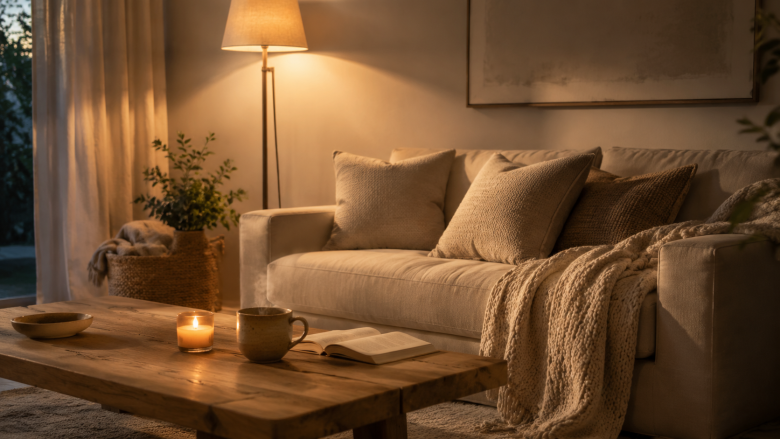
- Lighting a candle with a particular scent (lavender, sandalwood, or cedar). The act of striking a match and watching the flame is a physical cue.
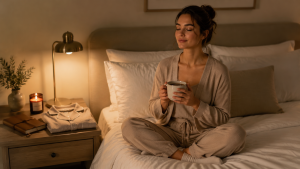
- Brewing a cup of herbal tea. The sound of the kettle, the steam, the weight of the mug in your hands – these all work.
- Changing into a specific pair of “at-home” clothes that you only wear after work.
- Turning on a single warm lamp and turning off the overhead light.
When I first tried this, I used a dimmer switch and a playlist of ambient rain sounds. The moment I hit the switch and pressed play, something clicked. My shoulders dropped. The transition was immediate.
The Action: A Gentle Focus That Interrupts Racing Thoughts
The action is the main activity. It should require just enough focus to keep your mind from spiraling, but not so much that it feels like work. Good actions have these qualities:
- They are low-stakes. There’s no goal, no deadline, no “improvement” to measure.
- They are hands-on. You use your hands or your body, which physically grounds you in the present.
- They are voluntary. You can stop after five minutes if you’re not feeling it. There’s no guilt for skipping.
We’ll get into specific actions in the next sections. The key is to pick one that aligns with what you actually need that evening. Some nights you need to be around people. Other nights you need quiet. The framework is flexible.
The Release: Letting Go of the Day (Without Forcing It)
The release is the small closing ritual that signals “the evening is done.” It can be as simple as flipping off the lamp, taking a final sip of tea, or saying goodnight to your partner. The release helps your brain bookend the evening. It prevents that feeling of floating into bed with unresolved tension.
A few ideas: write down one sentence about tomorrow’s to-do list (just one, not a full plan), do a two-minute gentle stretch, or spray a little lavender on your pillow. The release is not about journaling your feelings; it’s about creating a clear stopping point.
For a deeper dive into building a complete nightly sequence, see our guide on how to build a relaxing nighttime routine. It automates the whole process.
Social Connection as a Wind-Down (Not a Chore)
Most evening activity lists are written for solitary people. But humans are wired for connection. For many of us, talking with a partner, roommate, or close friend is the most socially activating thing we can do – in a good way. The key is to choose connection activities that are shared and calm, not high-energy or demanding.
Low-Effort Conversations Without a Screen
Instead of scrolling your phone next to each other, try a structured, low-stakes exchange. One of my favorites is the “three things” game. Each person shares three things from their day: one funny, one frustrating, and one unexpected. It’s simple, it’s natural, and it keeps you from falling into the trap of only mentioning the stressful parts. You don’t need to solve anything. You just listen and respond.
If you live alone, a phone call to a friend can serve the same purpose. But instead of a long catch-up, set a timer for 15 minutes and promise to hang up when it goes off. That boundary makes the call feel like a treat, not an obligation.
Simple Games That Don’t Require Setup
Card and board games can be wonderfully absorbing. But avoid games that have a long setup or lots of rules. Choose something you can play in 20 minutes or less. A few that work well:
- Uno or a standard deck for a quick game of Rummy or Go Fish.
- Co-op games like Forbidden Island or Pandemic (if you both like strategy) – but only if you can agree to stop at a natural point.
- Trivia games from apps like Geeks Who Drink (but that’s a screen, so maybe not for a screen-free night).
What matters is that you’re paying attention to each other, not to a screen. The laughter and lightheartedness are the point.
What to Do If You’re an Introvert (or Live Alone)
Social connection doesn’t have to be in-person. Writing a letter to an old friend, or even just sending a voice memo, can fill that connection need without draining you. If you’re an introvert, a quiet activity like sitting on the porch with your roommate while both of you read is still connected. The point is that you’re sharing space without the pressure to talk.
Creative Hands-On Hobbies: Knitting, Drawing, and Puzzles
There’s a reason knitting has been a stress-reliever for centuries. Repetitive hand movements activate the same brain regions that meditation does. They give your mind a single, focused task that doesn’t require decision-making. The same goes for drawing, coloring, or doing a jigsaw puzzle.
Why Creative Hobbies Beat Mindless Scrolling
The phone is the default evening activity for most people. It’s also the least relaxing. The blue light, the endless stream of information, and the dopamine hits all keep your brain in a state of alert. Creative hobbies, on the other hand, are what we call “flow-adjacent” – they absorb your attention but don’t push your arousal up.
I remember one evening when I was particularly stressed about a work email. I forced myself to pick up a spool of yarn (I had a scarf I was knitting) and just did three rows. Ten minutes passed. My breathing slowed. I realized I hadn’t thought about the email once. The repetitive stitch gave my brain a place to rest.
Making It Low-Effort: Choose Projects That Are Forgiving
The trick is to pick a project that doesn’t require a lot of mental effort to pick up. That means:
- Knitting or crocheting with a simple pattern (garter stitch, not lace). Keep the project small – a dishcloth, a scarf, not a sweater.
- Drawing with a pencil and paper. You don’t need to be good. Doodle, draw the view from your window, or do a simple contour drawing. The goal is your hand moving, not a masterpiece.
- Jigsaw puzzles. A 500-piece puzzle is perfect. You can work on it for 15 minutes and then step away. The picture gradually forms, giving you a sense of accomplishment without pressure.
One thing nobody tells you about these hobbies: they can become too absorbing. If you’re the type of person who gets lost in a project and forgets to sleep, set a timer. The point is relaxation, not finishing.
Cooking and Baking as a Calming Ritual (Not a Chore)
Most people think of cooking as another job – something to get done quickly so you can finally relax. But if you reframe it as a ritual, cooking can be one of the most soothing evening activities. It’s physical, it’s sensory, and it has a clear end point: a warm bowl of soup or a fresh loaf of bread.
The Power of Simple Recipes
The key is to choose recipes that are almost meditative in their repetition. Things like chopping vegetables, kneading dough, or stirring a risotto. These actions require your hands but not much cognitive load. I like to make a simple lemon pasta on days I feel scattered. The prep is just squeezing lemons, zesting, and whisking. It’s mindless and comforting.
If you’re not a cook, try baking a small batch of brownies or cookies. The measuring, sifting, and mixing are all repetitive. The smell of warm dough is an anchor. And you get to eat something delicious at the end – which is its own form of self-care.
Make It a Transition, Not a Marathon
Avoid elaborate recipes that require multiple pans and precise timings. The goal is not to impress anyone. It’s to give your brain a simple task. I recommend setting a rule: no recipe with more than five ingredients and a total cooking time of under 30 minutes. That’s enough to be absorbing, but not so long that you’re stressed about timing.
One practical tip: do the prep before you change into pajamas. The act of chopping and stirring keeps your hands busy while your mind settles. Then when you sit down to eat, you’re already in a different state.
Audio-Based Relaxation: Podcasts, Audiobooks, and Music
If you’re too tired to read or create, audio is a perfect low-effort friend. You can lie on the couch, close your eyes, and let a calm human voice or a piece of music carry you through the evening. The beauty of audio is that it doesn’t require any physical effort.
Choosing the Right Audio for Wind-Down
Not all audio is relaxing. A high-energy true crime podcast that makes your heart race is not the best choice. Instead, look for:
- Slow-Talk Podcasts – shows about history, nature, or even sleep stories. The BBC’s ‘In Our Time’ is a classic, but any podcast with a calm, steady narrator works.
- Audiobooks – especially fiction or memoir. Choose something with a gentle pace, and set a timer so it auto-stops after 20 minutes.
- Instrumental Music – ambient, classical, or lo-fi beats. The best is to have a playlist that you only use for evenings, so your brain associates it with rest.
I have a particular album – a live recording of acoustic guitar – that I only play when I’m winding down. After a few listens, my heart rate drops as soon as the first chord hits. It’s a conditioned response, but it works.
The 30-Minute Rule
Set a timer for 30 minutes maximum. If you go longer, you risk falling asleep with earphones or staying up too late. I use my phone’s bedtime timer that gradually fades the volume. That gradual fade is the release step from our framework.
One common misconception: audio is a passive activity, so it’s not “productive.” But that’s the point. Relaxation doesn’t have to be productive. You are allowed to just sit and listen.
Pet and Plant Care: Grounding Through Living Things
There’s a reason why having a dog or cat is associated with lower stress. Interacting with a pet gives you instant, non-judgmental connection. And caring for a plant can be just as soothing – the act of watering, checking leaves, and repotting forces you to focus on something outside of yourself.
Micro-Moments with Pets
You don’t need to play a vigorous game of fetch. A simple five-minute grooming session, a slow belly rub, or just sitting on the floor while your cat curls up next to you can lower your blood pressure. The key is to be present. Put your phone away. Watch your pet’s breathing. Let that be your meditation.
If you don’t have a pet, you can volunteer to walk a neighbor’s dog or just spend a few minutes watching birds from your window. The point is to connect with a living being that doesn’t care about your to-do list.
Plant Care as a Ritual
Watering your plants can be a small, mindful act. Notice the soil, the color of the leaves, whether there’s any new growth. Repotting a small succulent is a satisfying project that takes just a few minutes. The feel of the soil, the smell of fresh potting mix – it’s a sensory anchor.
I used to neglect my plants, but now I have a nightly routine: while my tea is brewing, I check if any plant needs a drink. It’s a tiny responsibility that gives me a sense of purpose without pressure.
Sensory Comfort: Light, Texture, and Warmth
The final piece of the puzzle is your environment. You can do all the right activities, but if your bedroom is harshly lit and cold, you won’t feel relaxed. Sensory comfort is about creating a low-stimulation space that signals safety and coziness.
Dim Lighting and the Color Temperature
Blue light from screens and overhead LEDs suppresses melatonin. Instead, use warm-toned bulbs (around 2700K) and dim lamps. A salt lamp or a string of fairy lights can work wonders. When I switched my living room to warm bulbs, my evening mood changed noticeably.
Weighted Blankets and Textures
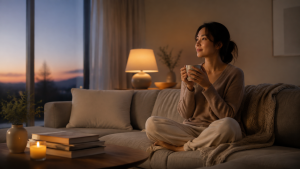
Weighted blankets apply deep pressure stimulation, which has been shown to reduce anxiety in some studies. Even a heavy throw blanket or a soft fleece can help. The physical weight makes you feel grounded. I have a chunky knit blanket that I only use for evening couch time – it became an anchor.
Warm Drinks and Small Comforts
Herbal tea, warm milk with honey, or even a small cup of bone broth are all good options. The warmth is soothing. Holding a warm mug is a classic grounding technique. The act of sipping slowly forces you to slow your breathing.
Most people don’t realize that a relaxing evening is not about the absence of everything – it’s about the presence of one or two comforting elements. You don’t need to overhaul your whole house. Just pick one: a candle, a fuzzy blanket, a specific tea.
Putting It All Together: Your Low-Effort Evening Plan
You don’t need to do everything every night. In fact, doing too much is counterproductive. The goal is to choose one anchor, one action, and one release that feel natural to you. Here’s a simple decision matrix to help you pick based on your state:
- If you feel tense and wired: Choose a body-focused activity like gentle stretching, a warm bath, or petting your dog. Anchor with a candle, release with a few deep breaths.
- If you feel emotionally drained and isolated: Choose a social connection activity – call a friend, play a game with your partner, or write a letter. Anchor with a warm drink, release with a short gratitude note.
- If you feel restless and bored: Choose a creative hobby – knit, doodle, puzzle. Anchor with a lamp, release with a tidy-up of your project space.
- If you feel scattered and anxious: Choose an audio-based activity – listen to a calm podcast or ambient music. Anchor with the audio itself, release with a timer.
For a more structured approach, read our essential evening tips for relaxation – it covers the environmental changes as well.
Also, if you’re someone who thrives on checklists, our 8 steps for evening wind-down is a printable list you can adapt.
The One Thing Nobody Tells You About Relaxing Evenings
Here’s the insight that changes everything: relaxing evenings are not about finding the perfect activity. They are about giving yourself permission to do less without feeling guilty. The most effective ritual is one that you can repeat without thinking about it. It becomes a habit, not a chore.
So the next time you search for “relaxing evening activities,” remember that you already have the tools. You just need to choose one tiny anchor, one gentle action, and one small release. The wine is not the point. The ritual is.
“The evening is not a reward for surviving the day. It’s a bridge to a better tomorrow. And bridges are best built with small, steady steps.”
Start tonight. Light a candle. Brew a cup of tea. Sit for two minutes and breathe. That’s enough. Everything else can come later.
For more ideas, check out our guide on how to make evenings more relaxing – it’s a good companion to this article.