Should You Even Eat Before Bed?
The short answer: yes, if you are genuinely hungry. But the longer, more useful answer involves understanding why you are reaching for food at 9:30 p.m. in the first place. I have spent years counseling clients on nighttime nutrition, and the most common mistake I see is people eating out of habit, boredom, or anxiety rather than actual physiological hunger.
Before we dive into specific foods, you need a quick gut check. If you had a balanced dinner and you are not hungry, eating a snack will not improve your sleep. It will only add unnecessary calories and potentially disrupt your digestion. On the flip side, going to bed with a rumbling stomach can keep you awake just as effectively as a double espresso. The goal is to find the middle ground: enough food to feel satisfied, but not so much that you feel stuffed.
This article is not another list of “15 miracle foods.” It is a decision-making guide. We will walk through the three most common late-night scenarios, what they mean for your sleep, and exactly what to eat in each case.
If You Are Hungry Before Bed: The 30-45 Minute Rule
Timing matters more than most people realize. I have coached clients who eat a perfect snack but then lie down immediately, only to wake up with heartburn or a restless night. The digestive system needs a head start. Your body cannot properly process food while you are horizontal, and the discomfort you feel is not just in your head – it is mechanical.
The sweet spot is to eat your snack 30 to 45 minutes before you plan to sleep. This gives your stomach enough time to begin emptying and for your blood sugar to stabilize. If you eat too early, you might get hungry again. If you eat too late, you risk reflux and disrupted sleep architecture.
When I first started experimenting with bedtime snacks, I made the mistake of eating a large bowl of cereal right before getting into bed. I woke up two hours later with a pounding heart and a sour stomach. The issue was not the cereal itself; it was the timing and portion. I was flooding my system with refined carbs right at the moment my body was trying to initiate its overnight fasting state.
Portion Size: The Handful Rule
You do not need a formal scale or calorie counting app at midnight. A simple visual cue works better. Aim for a portion that fits in the palm of your hand or a small ramekin. For most people, that translates to roughly 150 to 250 calories depending on the food. If you are eating something like cottage cheese or yogurt, keep it to about half a cup. If you are having nuts, a small handful – about 1 ounce – is plenty.
The thing nobody tells you about portion control is that it is not just about calories. It is about volume and digestion speed. A large volume of food, even if it is low-calorie like celery or watermelon, can still cause discomfort because your stomach has to work harder. A small, nutrient-dense snack is almost always better than a large, low-calorie one.
If you want a more structured evening routine to pair with your snack, we have a guide on building a cozy bedtime routine that covers the non-food elements like lighting and wind-down time.
The 3 a.m. Problem: Snacks for Sleep Maintenance, Not Sleep Onset
Most articles talk about snacks that help you fall asleep. But the more common complaint I hear from clients is not difficulty falling asleep – it is waking up at 3 a.m. with a racing mind or a growling stomach. These are two different problems requiring different nutritional strategies.
If you fall asleep easily but wake up in the early hours, your snack needs to focus on blood sugar stability. The goal is to keep your glucose levels steady through the night so your liver does not release stress hormones to compensate for a drop. This is where the macronutrient balance becomes critical.
The Protein-Fat-Fiber Trio
For sleep maintenance, you want a snack that contains all three: a little protein, a little fat, and a little fiber. This combination slows digestion and provides a steady release of energy. A pure carbohydrate snack – even a healthy one like fruit – will spike your blood sugar and then crash it a few hours later, which is exactly the pattern that wakes you up.
A few combinations that work well in practice:
- One small apple with a thin layer of almond butter
- A few whole-grain crackers with a slice of cheese
- Half a banana with a spoonful of peanut butter
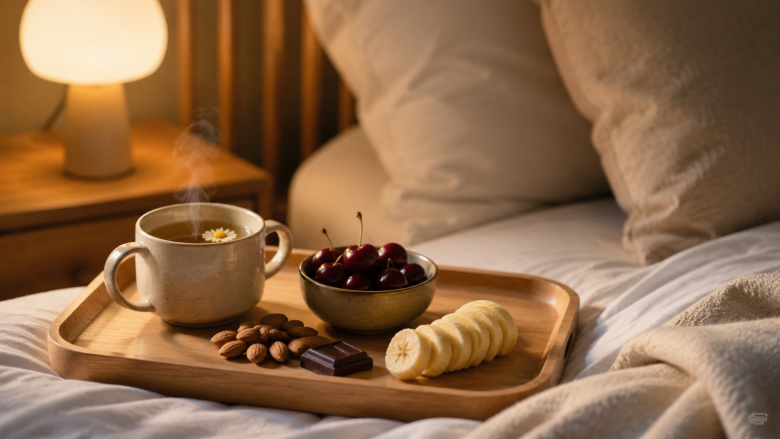
- A small handful of walnuts and a few dark chocolate chips
I have a client who swore she could not eat dairy at night because she had heard it causes mucus and congestion. She was waking up at 4 a.m. every night. When we switched her from a fruit-only snack to a small cheese and cracker combo, her sleep maintenance improved within a week. The key was not the dairy itself but the addition of protein and fat to slow down the carbohydrate absorption.
For a deeper look at how evening habits affect your energy the next day, you might find our article on an effortless bedtime plan to boost energy helpful.
What Science Actually Says About Specific Foods
You have probably heard about tart cherry juice, kiwi, and warm milk. These are not myths, but they are also not magic bullets. Let us look at what the evidence actually supports and, more importantly, when it matters.
Tart Cherry Juice: The Real Deal, With Caveats
Tart cherry juice is one of the most studied foods for sleep. Research from the National Institutes of Health shows that it can modestly improve sleep duration and efficiency because it is a natural source of melatonin and tryptophan. But there are two things nobody tells you.
First, the dose matters. Most studies use about 8 to 12 ounces of pure, unsweetened tart cherry juice, not a cherry-flavored beverage. Second, the sugar content is not trivial. If you have blood sugar concerns, drinking a full glass of juice before bed might do more harm than good. A better approach is to have a small 4-ounce portion mixed with sparkling water, or to skip the juice entirely and eat a small handful of dried tart cherries instead.
Kiwi: The Underrated Option
Kiwi is another food with a surprising amount of research behind it. One study published in the Journal of the American College of Nutrition found that eating two kiwis one hour before bed improved sleep onset, duration, and efficiency in adults with self-reported sleep difficulties. The effect is likely due to its high concentration of serotonin and antioxidants.
However, fruit is still sugar. If you are sensitive to sugar or have diabetes, eating two whole kiwis at night might be too much. One kiwi, paired with a small handful of pistachios, gives you the benefit without the glucose spike.
Warm Milk and the Placebo Effect
Warm milk is a classic recommendation, and for good reason. It contains tryptophan, which is a precursor to serotonin and melatonin. But here is the honest truth: the amount of tryptophan in a glass of milk is not high enough to significantly alter your brain chemistry on its own. The ritual of drinking something warm, however, can be deeply relaxing, and that psychological effect should not be underestimated.
I tell my clients this: if warm milk works for you, drink it. The ritual is the medicine. But do not expect it to fix a serious sleep problem. If you want the actual nutritional benefit, pair the milk with a few almonds, which contain magnesium and healthy fats that help with muscle relaxation.
What to Eat If You Have Acid Reflux or GERD
This is the group that gets the least helpful advice online. Most “best bedtime snacks” lists include citrus fruits, tomatoes, and chocolate – all of which are reflux triggers. If you have GERD, you need a completely different approach, and it is not just about what you eat but also about the timing and position.
First, the absolute worst bedtime snack for reflux is anything high in fat. Fat relaxes the lower esophageal sphincter, which is the valve that keeps stomach acid where it belongs. This includes fatty cuts of meat, full-fat dairy, and fried foods. Also avoid anything acidic like oranges, grapefruit, or pineapple, as well as carbonated drinks.
What works better for reflux-prone sleepers:
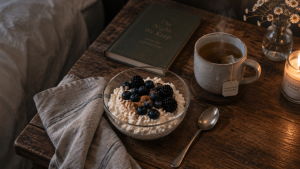
- A small bowl of plain oatmeal made with water or low-fat milk
- A few whole-grain crackers with a thin slice of low-fat cheese
- A small banana, which is naturally low-acid and coats the stomach
- A slice of whole-wheat bread with a thin layer of honey
You also need to respect the 45-minute rule more strictly than anyone else. Lying down with a partially full stomach is a recipe for a miserable night. If you have severe reflux, consider elevating the head of your bed by a few inches. This is not just a tip from a wellness blog – it is a standard clinical recommendation from gastroenterologists.
What to Eat If You Have Blood Sugar Concerns
If you have diabetes, prediabetes, or simply notice that you feel wired after eating certain foods at night, your bedtime snack needs a different strategy. The goal here is not just to avoid a spike but to prevent the overnight low that can trigger adrenaline and wake you up.
The concept of the “dawn phenomenon” – where your liver releases glucose in the early morning – can be mitigated with the right snack. The key is to include a slow-digesting protein and a small amount of complex carbohydrate. This pairing helps your body maintain a steadier glucose level through the night.
Some of the best options I have seen work in practice:
- Half a small apple with 1 tablespoon of peanut butter (no added sugar)
- A hard-boiled egg and a few whole-grain crackers
- Plain Greek yogurt (unsweetened) with a sprinkle of cinnamon
- A small handful of almonds and one square of 85% dark chocolate
One client of mine with type 2 diabetes was terrified of eating anything before bed because she thought it would spike her morning blood sugar. She was waking up at 5 a.m. with a racing heart. When she finally agreed to try a small protein-heavy snack – two boiled eggs and a few crackers – her morning readings actually improved. The overnight glucose dip was what was causing her early waking, and the snack prevented that dip.
What to Eat During Pregnancy
Pregnancy brings a unique set of challenges. You are often hungrier at night because your body is working hard, but you also face increased reflux, heartburn, and blood sugar fluctuations. The standard advice about eating a small snack still applies, but the choices need to be even more careful.
First trimester: nausea may make you want to eat crackers or plain carbs. That is fine, but try to add a little protein like a small piece of cheese or a few nuts to keep your blood sugar stable. Second and third trimester: reflux becomes more common, so you need to avoid the same triggers listed above – citrus, tomatoes, and high-fat foods.
A safe bet that works across all trimesters is a small bowl of unsweetened cereal with low-fat milk, or a slice of whole-grain toast with a thin layer of avocado. Both are gentle on the stomach, provide slow-release energy, and are unlikely to trigger heartburn.
Pregnancy also affects sleep architecture itself. If you are tracking your baby’s sleep patterns, you might find our sleep need calculator for babies useful for understanding what is coming after birth.
The Decision Tree: Which Snack Should You Choose?
Instead of giving you a flat list, here is a simple flow chart you can use tonight. Ask yourself these questions in order:
Step 1: Am I actually hungry? If no, drink a glass of water and go to bed. If yes, proceed.
Step 2: Do I have trouble falling asleep or staying asleep? If falling asleep is the issue, focus on foods that support relaxation and serotonin production – tart cherry juice, kiwi, or a small amount of warm milk. If staying asleep is the issue (you wake at 3 a.m.), focus on the protein-fat-fiber trio to stabilize blood sugar.
Step 3: Do I have reflux? If yes, avoid all acidic and high-fat foods. Stick to oatmeal, bananas, or plain crackers.
Step 4: Do I have blood sugar concerns? If yes, avoid fruit juice and dried fruit. Pair any carbohydrate with a protein or fat.
Step 5: How much time do I have? If you have less than 30 minutes before bed, choose something very small and easily digestible like a single piece of string cheese or a few almonds. If you have 45-60 minutes, you can have a slightly larger snack.
This decision tree is the framework I use with every single client, and it works because it treats the root cause rather than the symptom.
The Foods to Avoid: What Nobody Tells You
Most articles list foods to avoid like caffeine and sugar. Those are obvious. But there are a few sneaky culprits that I see causing problems in my practice all the time.
First, dark chocolate. I mentioned it as a good option earlier, but it is a double-edged sword. Dark chocolate contains a small amount of caffeine. For most people, a single square is fine. But if you are sensitive to caffeine, even that small amount can disrupt your sleep architecture, especially if you are eating it close to bedtime. The same goes for green tea, which many people incorrectly assume is caffeine-free.
Second, spicy foods. Even if you do not have diagnosed GERD, spicy food can cause subclinical reflux that does not present as heartburn but instead as restless sleep or night sweats. The capsaicin in chili peppers can raise your core body temperature, which is the opposite of what you want before bed.
Third, large amounts of water. You need to stay hydrated, but drinking a big glass of water with your bedtime snack is a mistake. You will likely wake up at 2 a.m. to use the bathroom, which fragments your sleep. Eat your snack, take a few small sips of water if needed, and stop drinking fluids at least an hour before bed.
Fourth, protein shakes or bars. These are marketed as healthy, but many contain added sugars, artificial sweeteners, or gums that can cause bloating and gas. A whole-food snack is almost always better.
How to Build This Into Your Nightly Routine
The best bedtime snack in the world will not help if you eat it in a chaotic environment. Your body needs cues that it is time to wind down. This is where the broader picture matters. If you have been struggling with sleep for a while, you might benefit from our step-by-step guide on how to build a healthy bedtime habit.
Here is a realistic sequence that works for most people:
1. Set a “snack alarm” about 45 minutes before your target bedtime. This is a non-negotiable time block.
2. Prepare your snack in the kitchen. Do not eat it in bed or on the couch. Eating at a table helps your brain register that you are eating, which aids digestion.
3. Eat slowly and mindfully. Put the phone down. This is not just about being present – it is about giving your stomach time to signal fullness to your brain.
4. After eating, do a calming activity for the next 30 minutes. This could be reading, gentle stretching, or a warm shower. Avoid screens.
5. Get into bed. If you are someone who likes a little structure, our article on an easy bedtime routine for busy weeknights has some practical tips that do not require an hour of free time.
If you follow this sequence and still find yourself hungry or waking up, it may be time to look at your dinner. A bedtime snack should not be a second dinner. If you are consistently ravenous at night, it is likely that your dinner lacked enough protein, fat, or fiber. Push more of your daily calories toward dinner and your evening snack becomes a smaller, more manageable bridge.
My Personal Experience and What I Would Do Differently
I have been in the nutrition space for over a decade, and I have made every mistake you can imagine. When I first started advising clients on sleep, I was overly focused on the “sleep superfoods” – the kiwis, the tart cherries, the chamomile tea. I would create elaborate snack plans that looked great on paper but failed in real life.
The turning point came when I was working with a client who was a shift worker. She did not have a regular bedtime, so the 30-45 minute rule was useless to her. We had to build a flexible system that worked around her unpredictable schedule. That experience taught me that rigidity is the enemy of good nutrition advice. Your snack should adapt to your life, not the other way around.
The other lesson I learned is that stress trumps food. If you are eating the perfect bedtime snack but your mind is racing with anxiety about work or family, the snack will not save you. Sleep is a whole-body process. Sometimes you need to address the mental component first. This is why I now ask clients about their pre-bed routine before I even look at their food diary.
Most people do not realize that a bedtime snack is only about 20% of the sleep equation. The other 80% is your overall sleep hygiene, your stress levels, and your consistency. The snack is just the finishing touch.
Putting It All Together: A Simple Cheat Sheet
Here is a quick reference you can save or screenshot. It distills everything above into the most actionable form.
- Hungry before bed but sleep well: Half a banana with a bit of almond butter, eaten 30 minutes before bed.
- Wake up at 3 a.m.: A few whole-grain crackers with cheese, or a small bowl of plain yogurt with nuts.
- Have acid reflux: A small bowl of oatmeal or a banana. Avoid all citrus, chocolate, and high-fat foods.
- Have blood sugar concerns: A hard-boiled egg with a few crackers, or half an apple with peanut butter.
- Pregnant: Unsweetened cereal with low-fat milk, or toast with avocado.
- Need something tiny and quick: A single piece of string cheese or a small handful of almonds.
If you take one thing from this article, let it be this: there is no single best bedtime snack. There is only the best snack for your specific body, your specific sleep pattern, and your specific constraints. Start with the decision tree, experiment for a few nights, and pay attention to how you feel in the morning. That feedback loop is more valuable than any list I can give you.